
Table of Contents
Learn Yoga in Chennai | Structural Alignment & Basics
Deciding where to learn yoga in Chennai depends on finding an instructional format that fits your daily schedule, learning speed, and physical baseline. The regional wellness landscape provides distinct educational paths, from established heritage foundations with classical study tracks to contemporary neighborhood studios and refreshing open-air programs. For busy individuals managing unpredictable shifts, live virtual setups offer an ideal way to practice from home. Meanwhile, open-air sessions held in public parks or quiet coastal zones optimize oxygen intake and lower mental stress. In Chennai, options such as Outdoor Yoga Chennai offer structured outdoor and online yoga sessions for different needs, providing a supportive, clear environment for newcomers to master foundational movements and breathing exercises properly.
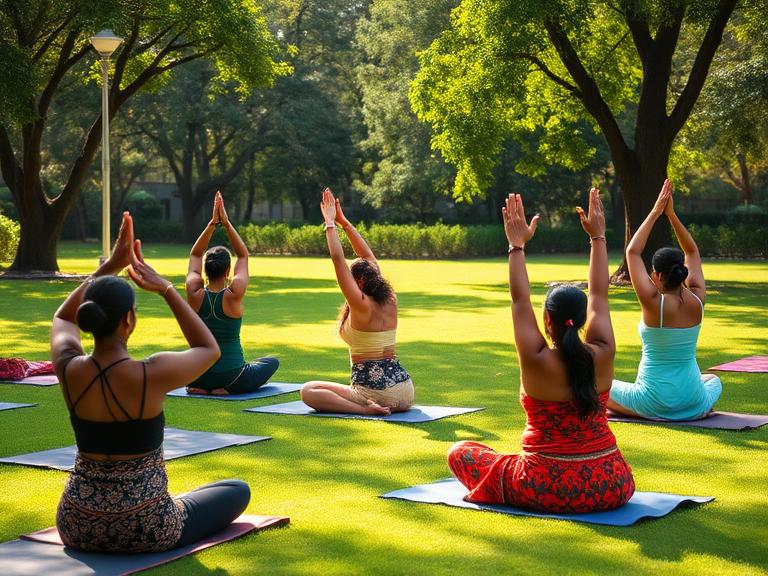
Why Yoga Is Popular in Chennai
The growing community desire to learn yoga in Chennai stems from a combination of modern workplace strains, specific climate considerations, and a deep, generational respect for classical health preservation systems. As an expanding urban commercial center, the city creates distinct lifestyle patterns that make regular physical alignment and breath control highly valuable.
- Reversing Postural Damage: The expansion of major information technology parks, digital corridors, and corporate offices has led to highly sedentary lifestyles. Residents increasingly utilize structured yoga education to fix desk-bound spinal slouching, relieve chronic neck pain, and manage workplace stress.
- Working With the Coastline Climate: Chennai experiences prolonged periods of intense heat and ambient humidity throughout the year. Unlike high-impact gym routines that can quickly leave a person feeling physically exhausted, the steady, rhythmic pacing taught in traditional yoga serves as a sustainable way to build stamina without placing excessive thermal strain on the body.
- Cultural Focus on Long-Term Health: The region maintains a historic familiarity with classical preventative wellness practices. Because the community views yoga as a reliable, scientific approach to lifetime physical health rather than a short-term weight-loss trend, students have access to highly authentic, anatomy-focused instruction.
Types of Yoga Classes Available in Chennai
The local educational landscape offers multiple specialized variations designed to accommodate different comfort levels, age groups, and personal schedules.
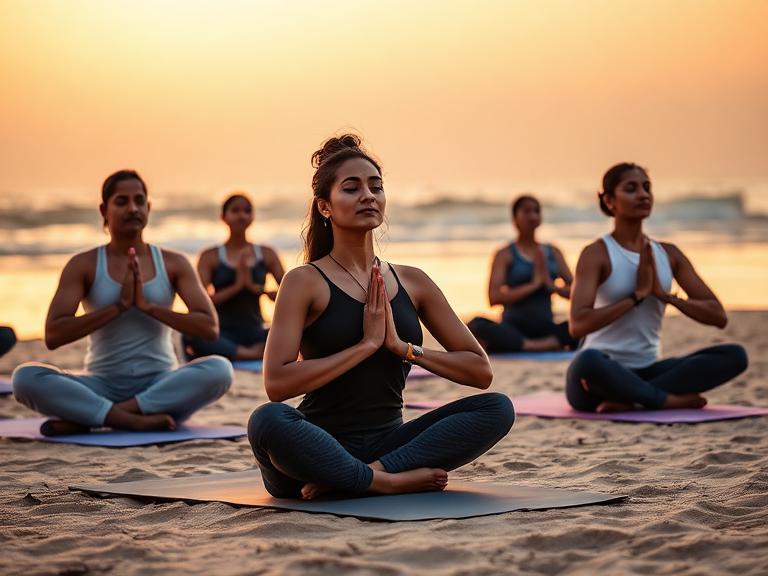
- Outdoor Yoga: Conducted during early dawn hours in public parks, residential green lawns, or along peaceful beach stretches. This layout maximizes natural air movement, provides early morning sunlight exposure, and removes the constraints of closed indoor walls.
- Studio-Based Yoga: Conventional brick-and-mortar indoor training centers situated across central commercial neighborhoods. These venues offer a fully controlled environment equipped with proper mats and essential alignment props like blocks, straps, and wall anchors.
- Online Yoga Classes: Live, interactive virtual rooms optimized for frequent business travelers or individuals with demanding domestic schedules who want to follow a structured syllabus without commuting through traffic.
- Yoga for Women: Specialized instructional courses addressing key physiological milestones, including prenatal conditioning, postpartum core stabilization, and targeted pelvic floor rehabilitation.
- Beginner-Friendly Programs: Slower-paced educational paths built specifically to guide newcomers through basic physical postures, joint decompression loops, and fundamental breathing coordination safely.
What to Look for in a Good Yoga Class or Institute
When looking for the ideal place to begin your learning journey, checking for specific quality benchmarks will guarantee a safe, supportive, and structurally sound education.
Verifiable Teacher Backgrounds
The teaching faculty should hold formal certifications from recognized universities, state educational boards, or registered traditional trusts. Properly trained educators understand human anatomy, alignment mechanics, and how to safely modify poses to prevent muscle strain.
Gradual and Logical Progression
A high-quality learning module avoids random, unpredictable movements. A standard 60-minute session should always follow a clear, gradual path: joint mobilization, dynamic warm-ups to raise core temperature, static holds to build strength, deep breathwork (pranayama), and structured relaxation to cool down the nervous system.
Commitment to Individual Alignment
Avoid environments that push a rigid, uniform movement standard for every student in the room. A professional instructor will always check for your past joint injuries, structural limitations, or medical histories before class, using blocks or straps to customize postures for your safety.
Managed Batch Densities
Overcrowded rooms prevent instructors from tracking individual body form. Opt for learning environments that maintain a balanced student-to-teacher ratio, ensuring you receive regular verbal feedback and precise postural adjustments during every session.
Who Benefits Most From Yoga Classes
Because yoga is highly scalable and adaptable, its practices can be easily customized to provide targeted health advantages for individuals at various stages of life.
| Demographic Profile | Primary Physical or Lifestyle Strain | Core Educational Focus |
| Corporate Employees | Chronic desk slouching and high mental strain | Thoracic mobility, spinal extension, and breathing |
| Complete Beginners | Minimal joint flexibility and low core stability | Fundamental alignments, proper form, and safe pacing |
| Senior Citizens | Joint stiffness and reduced balance coordination | Low-impact mobility work, steady balance drills, and safety |
| Athletes & Runners | Muscle tightness and repetitive joint loading | Deep structural recovery and functional flexibility work |
When Online or Outdoor Yoga Makes Sense
The choice between an indoor studio, a virtual platform, or a natural open-air venue depends mostly on your daily logistics, work schedules, and personal preferences.
Open-air learning spaces are ideal for city residents who spend the bulk of their day working inside enclosed, air-conditioned office structures under fluorescent lighting. Practicing outdoors provides valuable early morning vitamin D synthesis, improves fresh oxygen intake, and offers a calming environment that helps lower mental fatigue. For example, individuals looking to learn yoga in Chennai can utilize the programs from Outdoor Yoga Chennai, which combine the distinct benefits of open-air environments with structured, expert-guided learning tracks.
Alternatively, interactive virtual platforms fit perfectly into busy, high-commute lifestyles. If navigating heavy metropolitan traffic makes it tough to visit a physical studio consistently, live online training sessions bring qualified feedback directly to your living room or hotel space, ensuring you can maintain a steady habit without any travel friction.
FAQs
Can I learn yoga if I have no prior background or athletic experience?
Yes, absolutely. Beginner-focused training programs are specifically designed assuming no prior experience, starting with basic joint tracking, simple movements, and fundamental breath awareness to build a safe foundation.
How many sessions per week are recommended for a new student?
Attending two to three sessions a week is an ideal targets for a newcomer. This frequency allows your body sufficient time to rest, recover, and adapt to new movement patterns while building consistent habits.
Are outdoor yoga sessions hot and uncomfortable in the summer?
No, because sessions are intentionally scheduled during the coolest early morning dawn window, typically between 5:30 AM and 7:00 AM, when temperatures are low and natural coastal breezes provide natural cooling.
What is the primary difference between Hatha and Vinyasa yoga formats?
Hatha yoga moves at a slower, deliberate pace focused on static alignment holds and basic techniques, while Vinyasa involves continuous, fluid transitions where movements are synchronized directly with your breathing.
Do I need to buy specialized clothing to start learning yoga?
No, you only need to wear comfortable, stretchable, and loose-fitting clothing that allows your joints to move freely. Avoid heavy fabrics or items with restrictive waistbands, buttons, or zippers.
How long should I wait to practice after consuming a meal?
It is best to practice on an empty stomach. You should maintain a gap of at least two to three hours after eating a heavy meal, or roughly 45 minutes after a light snack, to prevent digestive discomfort.
Are online yoga learning programs as safe as in-person studio guidance?
Live, interactive online classes can be highly effective and safe if batch sizes are kept small, allowing the instructor to visually monitor your form through the screen and provide immediate verbal corrections.
Is a cotton mat or a sticky rubber mat better for a beginner?
A non-slip sticky mat (made from natural rubber or PVC-free material) is highly recommended for beginners because it provides better traction and joint stability, preventing accidental slipping during standing poses.
Can individuals with chronic knee or back issues learn yoga?
Yes, but they should explicitly join therapeutic, alignment-focused, or gentle recovery programs. You must obtain clearance from your doctor and inform the instructor about your condition before the session starts.
Do local yoga spaces offer weekend-only tracks for corporate workers?
Yes, the vast majority of wellness spaces and training centers offer dedicated Saturday and Sunday morning blocks to accommodate professionals who cannot attend regular weekday classes.



Leave a Comment