
Table of Contents
EV Charging Station Setup: Costs, Process & Business Guide
A commercial EV Charging Station Setup in India requires a dedicated electrical connection from the local DISCOM, an LT/HT transformer, certified EVSE (Electric Vehicle Supply Equipment) matching Indian standards (such as CCS2, CHAdeMO, or Type 2 AC), a digital payment-enabled Central Management System (CMS), and safety clearance certificate approvals under CEA regulations.
Key Takeaways
- Scalability is Key: Always size your initial civil and electrical trenching for 2x to 3x your starting charger capacity to avoid expensive future excavation.
- Grid Capacity Matters: Secure your sanctioned electrical load early. A single 60 kW DC dual-gun fast charger requires a dedicated load capacity that your existing commercial building setup may not support without an upgraded transformer.
- Compliance First: All installations in India must comply with the Central Electricity Authority (CEA) safety standards and Ministry of Power guidelines.
- CPO Integration: Relying on robust Charge Point Operator (CPO) management software is essential to handle dynamic billing, live tracking, and remote maintenance diagnostics.
The transition to electric mobility in India is accelerating rapidly. For business owners, real estate developers, fleet operators, and institutional investors, setting up an electric vehicle (EV) charging infrastructure represents both a future-proofing necessity and a highly lucrative business model. However, deploying a commercial EV charging station setup is not simply a matter of purchasing hardware and mounting it to a wall. It is an intricate, multi-disciplinary engineering project involving high-voltage utility grid integration, civil preparation, digital network orchestration, and strict regulatory compliance.
Whether you intend to set up a public highway charging plaza, electrify a last-mile delivery fleet hub, or integrate smart chargers into your corporate office park, understanding the technical, operational, and financial parameters is critical to maximizing your Return on Investment (ROI) and ensuring system reliability. This guide, compiled by the technical team at ZyCharge Energies Pvt. Ltd., provides a comprehensive blueprint to successful EV charging infrastructure planning, installation, and asset management in India.
What is an EV Charging Station Setup?
An EV charging station setup refers to the coordinated installation of Electric Vehicle Supply Equipment (EVSE), electrical distribution networks, and digital communication platforms designed to safely transfer electrical energy from the utility grid to an electric vehicle’s traction battery.
Technically, the setup acts as an extension of the electrical grid. While the vehicle contains an onboard charger for AC electricity conversion, DC fast charging setups bypass this onboard limitation, sending high-voltage direct current straight to the vehicle’s battery management system (BMS).
To operate as a commercial asset, the hardware must be linked via Open Charge Point Protocol (OCPP) to a cloud-based central management system (CMS). This system controls user authentication, power distribution, payment settlement, and real-time fault diagnostics.
How It Works: The Charging Mechanism
- Grid Power Step-Down: High voltage (typically 11 kV or 33 kV) or low voltage (415 V three-phase) from the local Distribution Company (DISCOM) grid enters the site’s main distribution panel. If a large-scale DC charging hub is being deployed, an onsite step-down transformer brings the voltage down to 415V.
- Conversion and Regulation:
- For AC EV Chargers, three-phase or single-phase alternating current is supplied directly to the vehicle’s onboard charger, which converts it to DC for battery storage.
- For DC Fast Chargers, the conversion from AC to DC happens inside the charger unit itself using heavy-duty power electronics modules, delivering high-amperage direct current directly to the vehicle’s battery pack.
- Communication Handshake: Once plugged in, the charger and the EV establish communication (using protocols like ISO 15118 or DIN 70121 for DC fast charging). The car shares its battery state of charge (SoC), maximum voltage tolerance, and thermal limits.
- Power Delivery & Monitoring: The system safely energizes the contactors and delivers power. Sensors continuously monitor temperature, insulation resistance, and current flow.
- Data Transmission: Real-time billing, power consumption, and session status are pushed to the ZyCharge Energies Pvt. Ltd. CPO platform via cellular network connections.
Part 2: Engineering, Deployment, & Industry Applications
Core Types of EV Chargers Used in Setup
Choosing the correct hardware is the first step in setting up a viable charging facility. The selection depends on target dwell times, vehicle types (2-wheelers, 3-wheelers, cars, or heavy commercial vehicles), and the available electrical load.
| Charger Category | Output Power | Electrical Input | Typical Dwell Time | Best Applications |
| Type 2 AC Charger | 7.4 kW – 22 kW | 230V Single-Phase / 415V Three-Phase | 4 – 8 hours | Offices, apartments, overnight fleet depots |
| CCS2 DC Fast Charger | 30 kW – 60 kW (Single/Dual Gun) | 415V Three-Phase | 45 – 90 minutes | Fleet hubs, retail malls, urban public parking |
| High-Power DC Charger | 120 kW – 240 kW+ | 415V/HT Three-Phase | 15 – 30 minutes | Highway corridors, interstate bus terminals |
Infrastructure Benefits for Commercial Sites
Integrating an EV charging station setup into commercial and residential properties delivers immediate and long-term tangible value:
- New Revenue Streams: Earn income from direct charging fees, parking space premiums, and auxiliary retail sales while drivers wait for their vehicles to charge.
- Property Valuation Boost: Real estate developments equipped with modern commercial EV charging solutions consistently command higher rental yields and market valuations.
- Corporate ESG Compliance: Fulfill carbon-reduction mandates and attract premium tenants by supporting corporate fleet electrification.
- Customer Retention: Dwell times at shopping complexes, hotels, and restaurants increase when patrons can charge their vehicles, boosting secondary spend.
Industry-Specific Applications
Every business vertical requires a highly tailored approach to charging setup:
1. Residential Communities & Real Estate
Multi-family residential complexes require smart, load-balanced AC EV chargers. With ZyCharge Energies Pvt. Ltd.’s smart charging setups, residential societies can implement private tenant billing, preventing unauthorized usage while preventing common area grid overloads.
2. Fleet & Logistics Hubs
Commercial delivery fleets need high-throughput DC fast chargers designed to minimize vehicle downtime. Fleet charging solutions require integration with route planning and telematics software to schedule charging cycles based on battery state-of-charge (SoC).
3. Highway & Transit Corridors
Highway setups require ultra-fast DC charging configurations (60 kW to 240 kW) featuring CCS2 dual-gun configurations. Reliability, robust cooling systems, and overhead canopy structures are mandatory to withstand harsh Indian weather conditions.
4. Workplaces & Commercial Offices
Workplace charging benefits from 7.4 kW to 11 kW AC chargers. Employees typically park for 7 to 9 hours, making extreme high-speed charging unnecessary. Instead, prioritized sequencing and smart load sharing help match infrastructure costs to employee parking habits.
Step-by-Step Installation Process
Deploying an enterprise-grade charging infrastructure is a structured engineering process. Here is how ZyCharge Energies Pvt. Ltd. delivers a turn-key project:
1.Site Feasibility Study & Engineering Assessment:Week 1.
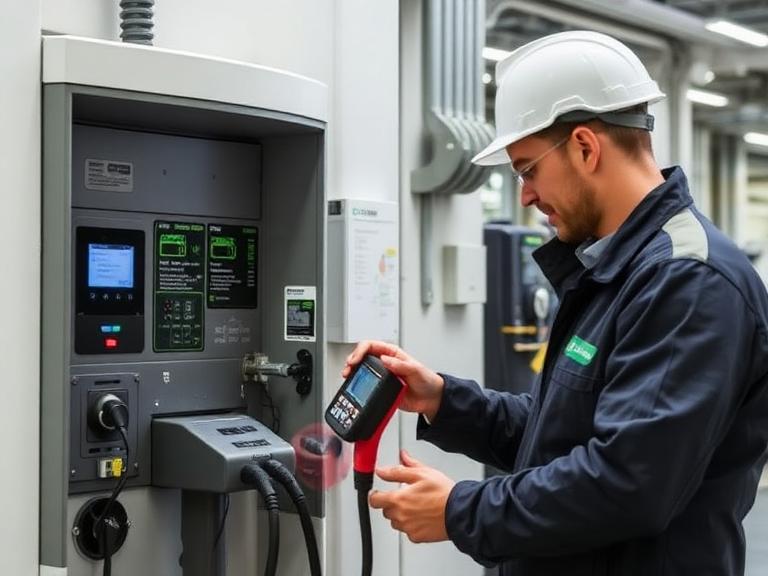
Conducting comprehensive geographic and electrical site assessments. Our engineers check current building transformer headroom, incoming cable sizing, cell signal strength (for CMS cloud connectivity), and structural pad options.
2.Load Sanctioning & DISCOM Approvals:Week 2 – 4.
Filing electrical load increment applications with the local DISCOM. This includes obtaining NOCs (No Objection Certificates) from municipal bodies, fire safety departments, and pollution control boards if setting up public charging plazas.
3.Civil Engineering and Infrastructure Construction:Week 4 – 5.
Excavating trenches for heavy-gauge copper/aluminum power cabling, pouring concrete foundations for the charger mounts, and installing protective crash bollards to protect the hardware from accidental vehicle impact.
4.Electrical Distribution & Switchgear Setup:Week 5.
Setting up a dedicated EV distribution board panel complete with MCCBs, digital energy meters, residual current devices (RCD Type B to prevent DC leakage), and high-reliability copper earthing grids.
5.EVSE Installation & Commissioning:Week 6.
Mounting physical AC/DC charger units, making final cable terminations, configuring internal power modules, establishing cloud connections over OCPP, and conducting detailed simulated electrical fault testing.
Common Challenges and Technical Solutions
Building out EV infrastructure comes with hurdles. Understanding these challenges early prevents costly downtime later.
- Grid Capacity Limitations:
- Challenge: The local transformer has insufficient spare capacity to handle multiple 60 kW DC fast chargers during peak periods.
- Solution: Deploying ZyCharge Energies’ dynamic load management system. This software-driven approach automatically throttles charging speeds down slightly during grid peak usage without blowing main circuit breakers.
- Harsh Operating Environments:
- Challenge: Extreme heat, heavy monsoon rain, and highly dusty environments cause premature power module failure in DC chargers.
- Solution: Installing chargers rated at IP54 or IP55 for moisture and dust protection, and specifying DC cabinets that feature isolated air duct cooling systems to keep internal electronics clean and dry.
- Connector Compatibility Issues:
- Challenge: Diverse vehicle models requiring different charging standards (CCS2, GB/T, Type 2 AC).
- Solution: Designing mixed-use, multi-standard bays. This ensures your site can service passenger cars, logistics vans, and luxury SUVs from a single site footprint.
Essential Safety & Compliance Checklist
Before energizing any commercial charging site, ensure the installation checks off every safety criteria:
- [ ] Dual Earthing System: Separate earthing connections for the charger cabinet enclosure and the internal neutral lines.
- [ ] Type B RCD Protection: Integrated Residual Current Devices capable of detecting both AC and smooth DC leakage currents to protect users from shock hazards.
- [ ] Surge Protection Device (SPD): Integrated Class II surge arresters on the input line to protect sensitive charger electronics from lightning strikes and line spikes.
- [ ] Emergency Stop Switch: A physically accessible, mushroom-type emergency stop button mounted on the outside of each charger unit.
- [ ] Ingress Protection (IP Rating): Minimum IP54 rating for outdoor-mounted chargers to prevent dust build-up and water ingress during heavy monsoons.
- [ ] Clear Warning Signage: Highly visible high-voltage danger plates and clear operating instruction manuals prominently displayed beside each unit.
Part 3: Support, Governance, & Integration
Why Choose ZyCharge Energies Pvt. Ltd.
Building public or commercial EV charging infrastructure requires a partner with specialized engineering expertise. ZyCharge Energies Pvt. Ltd. delivers complete end-to-end solutions:
- Turn-Key Execution: From initial site assessment and grid-load acquisition to civil construction and software configuration, we handle the entire project lifecycle.
- Reliable, Premium Hardware: Our AC and DC fast chargers feature advanced silicon carbide (SiC) power modules, ensuring higher electrical efficiency and minimal heat generation.
- Enterprise Management Software: Enjoy complete visibility into your charging operations. Our cloud-based CPO platform enables real-time monitoring, flexible billing rates, and diagnostic insights.
- Comprehensive AMC Packages: Protect your capital investment. Our proactive maintenance teams keep your stations running 24/7, keeping charger uptime over 98%.
Frequently Asked Questions
1. What is the average cost to set up a commercial EV charging station in India?
The setup cost varies significantly depending on power and charger choices. A dual-gun 60 kW DC fast charging setup typically ranges between ₹7,00,000 to ₹12,00,000. This includes the charger cost, civil works, electrical cabling, distribution panels, earthing systems, and initial labor. Larger, utility-scale setups requiring dedicated transformers can exceed ₹25,00,000.
2. What is the electrical load requirement for a 60 kW DC charger?
A 60 kW dual-gun DC charger requires approximately 65 kW to 70 kW of sanctioned electrical load from your local utility provider. This allows a buffer for auxiliary power needs, safety systems, and conversion efficiency losses.
3. Do I need an retail electricity license to sell EV charging services?
No, the Ministry of Power has officially de-licensed the operation of public EV charging stations. You do not need a license to sell electricity as a service, provided your station complies with all Central Electricity Authority (CEA) technical and safety standards.
4. How long does a typical installation process take?
AC charger installations at residential or workplace locations can often be completed in 1 to 2 days. Setting up a commercial-grade DC fast charging station generally takes 4 to 6 weeks, largely due to the timelines required for DISCOM load sanctioning, site civil works, and transformer integration.
5. What are the space requirements for a public EV charging bay?
A standard public charging bay requires approximately 10 to 12 square meters per vehicle. This ensures sufficient space for parking, charger cabinet clearances, ventilation, and a safe turning radius for vehicles.
6. What is dynamic load management in EV charging?
Dynamic load management is an intelligent software feature that constantly monitors a site’s total electrical consumption. If a building is nearing its grid power limit, the charging management system temporarily scales back the power delivered to connected EVs. This avoids power overloads without interrupting building operations.
7. Why is OCPP compatibility crucial for commercial chargers?
Open Charge Point Protocol (OCPP) is an open-industry standard that allows different hardware brands to communicate with any third-party management software. Choosing OCPP-compliant chargers ensures you are never locked into a single software provider, giving you the freedom to switch platforms or upgrade software down the road.
8. Can multiple vehicles charge simultaneously on a single charger?
Yes. Many commercial AC and DC chargers feature dual-gun configurations. When two vehicles plug in at the same time, the unit’s internal controller splits the available output power evenly or dynamically routes power based on each vehicle’s real-time battery needs.
9. What are the key maintenance requirements for a DC fast charger?
Regular maintenance includes replacing air intake filters, checking coolant levels in liquid-cooled systems, testing safety systems (RCDs and emergency stops), inspecting charging gun pins, and cleaning ventilation fans. ZyCharge Energies provides comprehensive Annual Maintenance Contracts (AMC) to handle these inspections.
10. Can I set up an EV charging station using solar energy?
Absolutely. Solar-powered EV charging setups combine solar panels, commercial battery energy storage systems (BESS), and specialized hybrid inverters. This allows you to charge vehicles directly with clean solar energy, dramatically reducing grid power costs.
Conclusion
Investing in an EV charging station setup is more than a nod to environmental sustainability—it is a smart, forward-looking business move. By addressing technical requirements early, choosing reliable hardware, and working with an experienced partner like ZyCharge Energies Pvt. Ltd., you can secure a highly profitable, reliable, and future-proof asset.
Ready to begin planning your transition to clean energy? Connect with our team of technical experts today to schedule an initial site assessment.
