
Table of Contents
Comprehensive Guide to Commercial EV Charger Setup Cost in Hyderabad
Driven by the Telangana Electric Vehicle & Energy Storage Policy, rapid urbanization, and an expanding commercial fleet sector, Hyderabad has emerged as a premier hub for electric mobility adoption in India. For business owners, real estate developers, fleet operators, and entrepreneurs, establishing an Electric Vehicle Charging Station (EVCS) presents a lucrative, future-proof commercial venture.
However, executing a successful commercial EV charging deployment requires a clear understanding of capital expenditures (CapEx), operational expenditures (OpEx), power grid sanctioning through local distribution companies (DISCOMs), civil design, and software integration.
This definitive 2,500-word guide breaks down the complete commercial EV charger setup cost in Hyderabad, detailing technical configurations, step-by-step regulatory workflows, revenue projections, site selection criteria, and turnkey execution strategies.
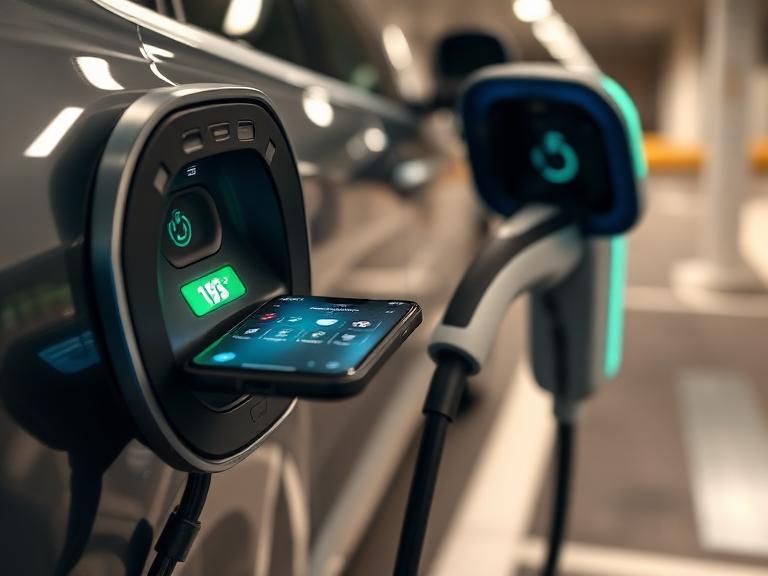
1. Cost Architecture: Initial Capital Investment (CapEx)
The total cost to establish a commercial EV charging station in Hyderabad ranges from ₹1.45 Lakhs for a basic dual-gun AC setup to ₹62 Lakhs+ for a multi-gun, ultra-fast DC charging hub.
The primary cost variables depend on charging speeds (AC vs. DC), existing grid capacity at the site, transformer requirements, and site infrastructure development.
Detailed Financial Breakdown Table
| Cost Component | Dual-Gun Commercial AC (7.4 kW – 22 kW) | Dual DC Fast Charger (30 kW – 60 kW) | High-Power Ultra-Fast DC Hub (120 kW – 240 kW) |
| EVSE Charger Hardware | ₹40,000 – ₹1.20 Lakhs | ₹3.50 Lakhs – ₹9.50 Lakhs | ₹14.00 Lakhs – ₹28.00 Lakhs |
| TSSPDCL Grid Connection & Metering | ₹30,000 – ₹60,000 | ₹1.50 Lakhs – ₹3.50 Lakhs | ₹4.00 Lakhs – ₹8.00 Lakhs |
| Transformer & Substation Setup | Not Required (Direct LT Connection) | ₹2.50 Lakhs – ₹5.50 Lakhs (100–200 kVA) | ₹7.00 Lakhs – ₹14.00 Lakhs (250–500 kVA) |
| Civil Works, Canopy, & Bay Markings | ₹35,000 – ₹80,000 | ₹1.20 Lakhs – ₹2.50 Lakhs | ₹2.50 Lakhs – ₹6.00 Lakhs |
| Cabling, Earthing, & Safety Panels | ₹25,000 – ₹50,000 | ₹80,000 – ₹1.80 Lakhs | ₹2.00 Lakhs – ₹4.50 Lakhs |
| CMS Software, Network, & Testing | ₹15,000 – ₹30,000 | ₹40,000 – ₹75,000 | ₹75,000 – ₹1.50 Lakhs |
| Total Estimated Investment | ₹1.45 Lakhs – ₹3.40 Lakhs | ₹9.45 Lakhs – ₹23.55 Lakhs | ₹30.25 Lakhs – ₹62.00 Lakhs |
2. Granular Breakdown of Setup Cost Components
A. Charger Hardware (EVSE Supply)
Electric Vehicle Supply Equipment (EVSE) constitutes the single largest hardware investment.
- AC Slow/Fast Chargers (Type 2): Ideal for long-dwell locations such as office parks, residential apartments, and hotel parking. Units range from 7.4 kW to 22 kW, costing between ₹40,000 and ₹1,20,000.
- DC Fast Chargers (CCS2 / CHAdeMO): Essential for highway hubs, commercial fleets, and public plazas where dwell time is under 45 minutes. A 30 kW single/dual gun charger ranges from ₹3.5 Lakhs to ₹5.5 Lakhs, whereas 60 kW dual-gun units reach ₹8.5 Lakhs to ₹10 Lakhs.
- Ultra-Fast DC Chargers (120 kW – 240 kW): Designed for heavy commercial vehicles, buses, and high-end passenger EVs. These industrial-grade cabinets cost between ₹14 Lakhs and ₹28 Lakhs.
B. Power Infrastructure & DISCOM Approvals (TSSPDCL)
Electricity supply in Greater Hyderabad is primarily administered by the Telangana Southern Power Distribution Company Limited (TSSPDCL).
- Low Tension (LT) vs. High Tension (HT): Loads up to 56 kW (75 HP) can be serviced via LT supply (415V, 3-Phase). Loads exceeding 56 kW mandate an HT connection (11 kV or 33 kV), requiring a dedicated transformer substation.
- Substation Costs: Installing a 100 kVA to 500 kVA outdoor distribution transformer, along with Ring Main Units (RMU), AB switches, and circuit breakers, adds ₹2.5 Lakhs to ₹14 Lakhs to the CapEx.
C. Civil Engineering & Bay Layout Design
Creating a functional, safe, and accessible commercial station requires structural and civil modifications:
- Foundation Pedestals: Reinforced concrete pads to secure heavy DC cabinets.
- Canopy & Lighting: Weatherproofing canopies (UV and rain protection) integrated with LED security lights and CCTV surveillance (~₹1.5 Lakhs – ₹4 Lakhs).
- Bay Markings & Signage: Green anti-skid epoxy paint on parking bays, wheel stoppers, directional signboards, and accessibility ramps (~₹50,000 – ₹1.2 Lakhs).
D. Electrical Cabling, Safety, and Earthing Systems
EV infrastructure requires strict compliance with Central Electricity Authority (CEA) safety protocols:
- Armored Copper/Aluminum Cables: Heavy-duty XLPE armored cables running from the panel board to the chargers (~₹300 to ₹1,200 per meter based on thickness).
- Earthing Infrastructure: Dedicated chemical earth pits (minimum 3 distinct pits for neutral, equipment body, and surge protection) to ensure earth resistance remains below 1 Ohm (~₹45,000 – ₹85,000).
- Protection Devices: Surge Protection Devices (SPD), Type-A Residual Current Circuit Breakers (RCCB), and Air Circuit Breakers (ACB) housed within an IP65 outdoor enclosure.
E. Software & Network Onboarding (CMS)
Hardware requires integration with an OCPP 1.6J or 2.0.1 compliant Charger Management System (CMS). Setup includes cloud licensing, SIM cards with static IPs for continuous communication, dynamic pricing configuration, and integration with payment gateways (UPI, Paytm, Credit/Debit cards).
3. Regulatory Approvals, Licensing & Compliance in Telangana
Opening a commercial EV station in Hyderabad does not require a formal power distribution license, making market entry straightforward. However, statutory safety and utility clearances remain mandatory.
+-----------------------------------------------------------------------------------+
|                            REGULATORY APPROVAL WORKFLOW                           |
+-----------------------------------------------------------------------------------+
|  1. Land Title / Lease Agreement (Min. 5-10 Year Commercial Lease)               |
|                                         ↓                                         |
|  2. Load Sanction Application to TSSPDCL (Category LT-IX or HT EV Charging)      |
|                                         ↓                                         |
|  3. Transformer & HT Substation Installation (For Loads > 56 kW)                  |
|                                         ↓                                         |
|  4. Inspection & Statutory Safety NOC by CEIG (Chief Electrical Inspectorate)     |
|                                         ↓                                         |
|  5. Commercial Meter Energization by TSSPDCL                                      |
|                                         ↓                                         |
|  6. Fire Safety Clearance & GHMC Local Commercial Permit                          |
+-----------------------------------------------------------------------------------+
Key Regulatory Steps Defined
- No Distribution License Required: Under guidelines issued by the Ministry of Power (Government of India) and adopted by Telangana, operating an EV charging station is classified as a service, not a resale of electricity.
- Dedicated EV Power Tariff (LT-IX / HT-EV): TSSPDCL charges a subsidized base energy tariff for EV stations (~₹6.00 per kWh) compared to standard commercial rates (₹8.50 – ₹11.00 per kWh), drastically lowering operational energy costs.
- CEIG Certification: Any electrical installation above 15 kW must receive safety inspection clearance from the Chief Electrical Inspectorate to Government (CEIG), Telangana, before live energization.
- Fire Safety & GHMC Norms: Facilities must carry multi-class fire extinguishers (CO2 and Dry Chemical Powder) and obtain local GHMC (Greater Hyderabad Municipal Corporation) clear-access permits for vehicular entry/exit.
4. Operational Expenses (OpEx) & Maintenance Costs
Running a seamless EV charging facility in Hyderabad involves monthly fixed and variable operational expenses.
+-----------------------------------------------------------------------------------+
|                          MONTHLY OPERATIONAL COST STRUCTURE                       |
+-----------------------------------------------------------------------------------+
|  [TSSPDCL Grid Power Usage]      ~60% - Base Energy Costs (@ ~₹6.00/kWh)          |
|  [Land Lease / Location Rent]    ~20% - Fixed monthly commercial lease            |
|  [CMS & Cloud Software Fees]     ~8%  - SaaS platform & network connectivity      |
|  [Maintenance & Hardware AMC]    ~7%  - Preventative care & spare parts           |
|  [Manpower / Site Security]      ~5%  - Optional valet or guard services          |
+-----------------------------------------------------------------------------------+
Detailed OpEx Breakdown
- Electricity Tariff Costs: Variable expense calculated directly on total units consumed.
- Energy Charge: ~₹6.00 / kWh
- Fixed Demand Charges: ~₹75 to ₹150 per kVA of sanctioned load per month
- Electricity Duty & Taxes: Subject to state policy levies (~5%).
- Land Lease Costs: Locations in tier-1 Hyderabad zones (HITEC City, Madhapur, Gachibowli) command monthly rents of ₹35,000 – ₹1,20,000 for 2–4 parking bays. Outer Ring Road (ORR) exits and peripheral commercial sites range between ₹15,000 and ₹40,000 per month.
- Annual Maintenance Contracts (AMC): Hardware manufacturers or third-party providers charge between 3% and 7% of the hardware cost annually for routine preventive servicing, cable wear replacement, and emergency component repairs.
- Software SaaS Fees: CMS operators take either a monthly fixed subscription fee (₹500 – ₹1,500 per connector/month) or a revenue commission (5% – 12% per charging transaction).
5. Revenue Models, Financial Projections & Payback Period
Commercial charging station operators in Hyderabad generate revenue primarily through energy markups, station usage fees, and secondary value-added services.
Financial Viability Case Study: Dual 60 kW DC Fast Charger Hub
Assumptions:
- Total Initial Investment (CapEx): ₹18,50,000 (Hardware, Grid, Civil, Transformer, CMS)
- Sanctioned Load: 75 kVA
- Daily Operating Hours: 16 Hours
- Average Station Utilization Rate: 25% (6 hours of active charging per day per gun)
- Power Delivered Daily: 60 kW × 2 guns × 6 hours = 720 kWh (Units) per day
- Monthly Power Delivered: 720 units × 30 days = 21,600 kWh
Revenue & Margin Calculations:
- TSSPDCL Input Power Cost: ₹6.00 per kWh
- Retail Billing Rate to Customer: ₹18.00 per kWh
- Gross Margin per kWh: ₹12.00 per kWh
- Gross Monthly Energy Revenue: 21,600 units × ₹18.00 = ₹3,88,800
- Cost of Power (TSSPDCL Bill): 21,600 units × ₹6.00 = ₹1,29,600
- Gross Profit: ₹2,59,200 / month
Less Monthly Operating Expenses (OpEx):
- Commercial Land Rent: ₹45,000
- Fixed Demand Charges & Taxes: ₹12,000
- CMS Software & Payment Gateway Commission (8%): ₹31,104
- Maintenance Reserve & Insurance: ₹10,000
- Site Security & On-Site Amenities: ₹15,000
- Total Monthly OpEx: ₹1,13,104
Net Profitability & Payback:
- Net Monthly Profit: ₹2,59,200 – ₹1,13,104 = ₹1,46,096 / month
- Net Annual Profit: ₹1,46,096 × 12 = ₹17,53,152 / year
- Projected Payback Period: ₹18,50,000 / ₹17,53,152 ≈ 1.05 Years (12.6 Months)
(Note: Actual payback typically spans 18 to 30 months when factoring in lower initial ramp-up utilization rates of 10-15% during the first 6 months).
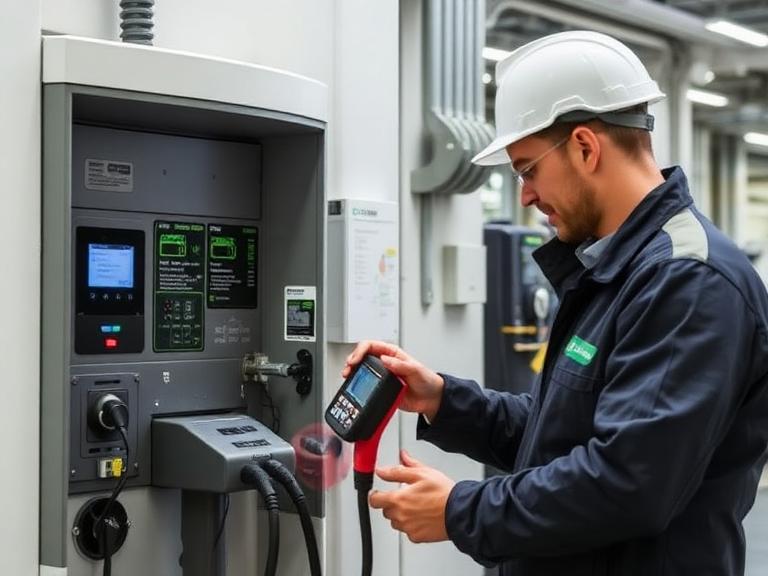
6. Prime Locations for EV Charging Stations in Hyderabad
Station viability is deeply linked to location dynamics. Sites with high vehicular density, established grid capacity, and nearby amenities command high utilization rates.
+------------------------------------------------------------------------------------+
|                         TOP HIGH-YIELD LOCATIONS IN HYDERABAD                      |
+------------------------------------------------------------------------------------+
|  • IT & Commercial Hubs     : HITEC City, Gachibowli, Madhapur, Financial District |
|  • Transit Corridors        : Outer Ring Road (ORR) Interchanges, NH-65, NH-44      |
|  • Retail & Hospitality     : Inorbit Mall, Nexus Hyderabad, Jubilee Hills Corridors|
|  • High-Density Logistics   : Shamshabad Airport Zone, Bowenpally, Cherlapally     |
+------------------------------------------------------------------------------------+
Micro-Market Breakdown
- IT Corridors (HITEC City, Gachibowli, Nanakramguda): High density of corporate EV fleets, employee daily commutes, and premium EV owners. Ideal for dual 22 kW AC chargers alongside 60 kW DC fast chargers.
- Outer Ring Road (ORR) Toll Exit Plazas: Vital for long-distance intercity travellers (e.g., Hyderabad-Vijayawada, Hyderabad-Bengaluru corridors). Demands ultra-fast 120 kW – 240 kW DC charging plazas.
- Commercial Retail Plazas (Jubilee Hills, Banjara Hills, Kukatpally): High footfall destinations where customers dwell for 1 to 3 hours. Ideal for 30 kW – 60 kW DC fast chargers that supply 80% charge during shopping or dining.
- Logistics Hubs (Shamshabad, Medchal, Patancheru): Fast-growing zones for electric 2-wheeler, 3-wheeler, and 4-wheeler commercial delivery fleets (Amazon, Flipkart, Porter). Hybrid charging parks with high-density AC and low-voltage DC sockets perform best here.
7. Step-by-Step Implementation Strategy for Investors
+------------------------------------------------------------------------------------+
|                             PROJECT EXECUTION ROADMAP                              |
+------------------------------------------------------------------------------------+
|  Phase 1: Feasibility Study & Site Assessment               (Days 1 - 7)           |
|  Phase 2: Land Leasing & Civil Architecture Planning        (Days 8 - 15)          |
|  Phase 3: TSSPDCL Load Application & Discom Processing       (Days 16 - 35)         |
|  Phase 4: Hardware Procurement & Civil/Electrical Prep      (Days 25 - 45)         |
|  Phase 5: Substation, Transformer, & Charger Installation   (Days 40 - 55)         |
|  Phase 6: CEIG Safety Inspection & Meter Energization       (Days 50 - 65)         |
|  Phase 7: CMS Software Integration, Testing, & Launch       (Days 60 - 70)         |
+------------------------------------------------------------------------------------+
- Site Feasibility & Grid Audit: Survey transformer proximity, cable length needs, vehicle maneuvering space, and physical visibility.
- Contractual Lease Execution: Secure a registered lease agreement for a minimum of 5 to 10 years with clear provisions for commercial utility subleasing.
- Load Sanction Filing: Submit an application on the TSSPDCL online portal under the LT-IX / HT-EV category, appending land documents, single line diagrams (SLD), and sanctioned load requests.
- Civil & Electrical Erection: Build elevated concrete foundations, lay heavy-duty armored cables inside HDPE conduits, and construct dedicated earthing pits.
- Transformer Erection: For HT connections, install the transformer, HT metering cabinet, and safety fences in strict alignment with DISCOM specifications.
- CEIG Clearance: Submit as-built drawings to the CEIG office, schedule a physical inspection, and obtain the formal charging authorization certificate.
- Grid Connection & Testing: TSSPDCL installs the net meter / EV meter and energizes the line. Run testing procedures using OCPP diagnostic protocols.
- Commercial Go-Live: List the charging station on popular EV aggregator apps (PlugShare, Tata Power EZ Charge, Statiq, Zeon Charging) to drive immediate customer discovery.

9. Frequently Asked Questions (15 Detailed FAQs)
Q1: What is the baseline commercial EV charger setup cost in Hyderabad?
Answer: Setting up a basic dual-connector commercial AC charging station costs between ₹1.45 Lakhs and ₹3.4 Lakhs. Deploying a commercial DC fast-charging setup (30 kW to 60 kW) requires an investment of ₹9.45 Lakhs to ₹23.55 Lakhs, covering charger hardware, grid connection, transformer infrastructure, civil foundations, and software onboarding.
Q2: What electricity tariff applies to commercial EV charging stations in Hyderabad?
Answer: TSSPDCL provides a dedicated LT-IX / HT EV charging tariff category. Base energy charges are fixed at approximately ₹6.00 per unit (kWh), which is significantly lower than standard commercial electricity rates (₹8.50 – ₹11.00 per unit), dramatically reducing operating energy expenses.
Q3: Is an electricity resale license required to run an EV station in Telangana?
Answer: No. Clarifications issued by the Ministry of Power and adopted by the Telangana State Government specify that charging an electric vehicle is classified as a service, not a resale of electricity. Consequently, no distribution license is required.
Q4: How long does it take to secure TSSPDCL power approval in Hyderabad?
Answer: Obtaining power load approvals, passing physical site inspections, and completing meter energization from TSSPDCL typically spans 15 to 30 working days across the Greater Hyderabad Municipal Corporation (GHMC) limits.
Q5: What is the average payback period for a commercial DC fast charger?
Answer: At an average daily station utilization rate of 25% (around 6 hours of active charging per gun per day), a commercial DC fast-charging station achieves complete capital expenditure payback within 18 to 30 months.
Q6: When is a dedicated transformer mandatory for an EV station setup?
Answer: Under TSSPDCL grid regulations, any commercial electricity load requirement exceeding 56 kW (75 HP) mandates an HT (High Tension) connection, requiring the installation of a dedicated step-down transformer (11 kV to 415 V).
Q7: Which charger connector types should be installed for maximum vehicle compatibility?
Answer: To ensure maximum vehicle coverage, commercial charging stations should deploy CCS2 (Combined Charging System 2) for passenger EVs and heavy vehicles, Type 2 for AC fast charging, and LEV DC / Type 6 sockets for commercial electric 2-wheelers and 3-wheelers.
Q8: What software management system (CMS) is required?
Answer: Stations require an OCPP-compliant (Open Charge Point Protocol 1.6J or 2.0.1) Central Management System. This cloud software enables dynamic session pricing, remote station diagnostics, real-time app discovery, and automated mobile payment processing (UPI, credit cards, RFID cards).
Q9: What are the yearly maintenance costs for a commercial EV station?
Answer: Routine maintenance, preventive servicing, spare parts, and network uptime coverage cost approximately 3% to 7% of the original hardware CapEx per year under standard Annual Maintenance Contracts (AMC).
Q10: Are financial incentives or state subsidies available in Telangana?
Answer: Yes. Under the Telangana Electric Vehicle & Energy Storage Policy, capital subsidies and electricity duty exemptions are available for early public charging infrastructure developers, subject to state quota availability and site eligibility.
Q11: How much physical land area is required for a 2-bay commercial charging station?
Answer: A standard 2-bay commercial EV station requires between 300 and 500 square feet of flat, accessible commercial space to comfortably accommodate vehicle parking bays, charger pedestals, protective buffers, and maneuvering space.
Q12: Can solar PV panels be integrated into a commercial EV station in Hyderabad?
Answer: Yes. Installing grid-tied solar photovoltaic (PV) panels on station canopies offsets grid energy draw during peak daytime hours, reducing the net per-unit energy generation cost to under ₹3.00 per kWh.
Q13: What electrical safety protections are mandatory for public charging installations?
Answer: Mandated safety infrastructure includes dual-body chemical earthing pits (resistance < 1 Ohm), Type-A Residual Current Circuit Breakers (RCCB), Surge Protection Devices (SPD), isolation switches, emergency stop buttons, and multi-class CO2/DCP fire extinguishers.
Q14: Where are the highest-yielding commercial EV charging locations in Hyderabad?
Answer: Top-performing commercial hubs include major tech corridors (HITEC City, Gachibowli, Madhapur), transit routes along the Outer Ring Road (ORR) interchanges, high-footfall shopping destinations (Jubilee Hills, Kukatpally), and logistics clusters near Shamshabad Airport.
Q15: Can a commercial EV station serve passenger cars and commercial fleets simultaneously?
Answer: Yes. Designing a hybrid charging park with high-power CCS2 DC dual-gun chargers alongside multi-socket AC/DC units accommodates both private passenger cars and commercial fleet delivery vehicles, keeping daily station utilization high.
10. HTML Meta Details
Insert the following metadata into the document <head> to maintain optimal search engine indexing and search ranking performance.
HTML
<!-- HTML Primary Meta Tags -->
<title>Commercial EV Charger Setup Cost in Hyderabad (2026 Price Guide)</title>
<meta name="title" content="Commercial EV Charger Setup Cost in Hyderabad (2026 Price Guide)" />
<meta name="description" content="Explore the full commercial EV charger setup cost in Hyderabad. Comprehensive guide covering TSSPDCL power tariffs, DC fast charger CapEx, civil costs, and ROI." />
<meta name="keywords" content="commercial EV charger setup cost Hyderabad, EV charging station cost Hyderabad, DC fast charger setup cost, TSSPDCL EV tariff, EV charging business Telangana, EVSE installation Hyderabad" />
<meta name="robots" content="index, follow" />
<meta name="language" content="English" />
<link rel="canonical" href="https://example.com/commercial-ev-charger-setup-cost-hyderabad" />

<!-- Open Graph / Facebook Meta Tags -->
<meta property="og:type" content="article" />
<meta property="og:url" content="https://example.com/commercial-ev-charger-setup-cost-hyderabad" />
<meta property="og:title" content="Commercial EV Charger Setup Cost in Hyderabad (2026 Price Guide)" />
<meta property="og:description" content="Complete breakdown of commercial EV charging station setup costs in Hyderabad. Learn about equipment pricing, DISCOM tariffs, and setup steps." />
<meta property="og:image" content="https://example.com/assets/commercial-ev-charger-hyderabad.jpg" />

<!-- Twitter Meta Tags -->
<meta property="twitter:card" content="summary_large_image" />
<meta property="twitter:url" content="https://example.com/commercial-ev-charger-setup-cost-hyderabad" />
<meta property="twitter:title" content="Commercial EV Charger Setup Cost in Hyderabad (2026 Price Guide)" />
<meta property="twitter:description" content="In-depth cost architecture, regulatory clearances, and profitability models for setting up a commercial EV charger in Hyderabad." />
<meta property="twitter:image" content="https://example.com/assets/commercial-ev-charger-hyderabad.jpg" />
Strategic Summary
Investing in a commercial EV charging station in Hyderabad offers an exceptional opportunity to participate in India’s electric mobility transition while building a high-yield asset. Key success factors include:
- Securing strategic commercial land with strong visibility.
- Leveraging the subsidized TSSPDCL LT-IX EV tariff (~₹6.00/unit) to maximize profit margins.
- Deploying reliable, OCPP-compliant dual-connector hardware capable of serving diverse EV fleets.
By following the regulatory pathways, civil standards, and financial frameworks outlined in this guide, station developers can launch and scale profitable charging infrastructure across Greater Hyderabad.
