
Table of Contents
Finding the Best Skin Specialist Near Me: Complete Guide to Dermatological Care, Treatments, & Clinical Excellence
When dealing with skin irritations, persistent acne breakouts, hair thinning, or complex dermatological conditions, searching for a “skin specialist near me“ is often the crucial first step toward recovery. Your skin is your body’s largest organ, functioning as a protective barrier, a vital regulator of body temperature, and a primary indicator of your internal health.
Finding the right board-certified dermatologist ensures that you receive evidence-based treatments tailored to your unique skin type rather than temporary salon fixes or unsafe over-the-counter remedies. This comprehensive guide explores everything you need to know about dermatological care, including qualifications, specialized treatments, diagnostic methodologies, clinic evaluation criteria, and structured JSON-LD schema markup for local SEO implementation.
1. Understanding Dermatological Qualifications: What to Look For
Not all practitioners offering skin treatments hold formal medical credentials. When searching for a certified skin doctor, verifying their medical education and professional accreditation guarantees safe and clinical-grade interventions.
Key Medical Credentials
- MBBS (Bachelor of Medicine, Bachelor of Surgery): The foundational medical degree required before specializing in dermatology.
- MD in Dermatology, Venereology & Leprosy (DVL): A comprehensive 3-year postgraduate degree demonstrating extensive clinical training in skin disorders, sexually transmitted infections, and advanced aesthetic procedures.
- DVD / DNB (Diploma in Dermatology / Diplomate of National Board): Recognized post-graduate diplomas and certifications in clinical dermatology.
- Fellowships & Specialized Training: Advanced post-doctoral fellowships in pediatric dermatology, trichology, dermatopathology, or laser surgery.
Dermatologist vs. Aesthetician vs. Cosmetologist
| Parameter | Board-Certified Dermatologist | Clinical Cosmetologist | Esthetician / Salon Specialist |
| Education | MBBS + MD/DNB in Dermatology (8–10+ years) | MBBS/BAMS/BDS + Short Diploma | Certificate / Non-Medical Vocational Training |
| Medical Diagnosis | Full medical diagnosis & prescription rights | Limited to aesthetic procedures | Cannot diagnose or prescribe medication |
| Conditions Treated | Acne, Psoriasis, Eczema, Skin Cancer, Melasma | Superficial aesthetic enhancements | Surface hydration, basic facials |
| Medical Lasers | Qualified to operate US-FDA cleared medical lasers | Varies; limited clinical supervision | Basic non-medical light devices |
| Safety Protocols | Strict hospital/clinical safety standards | Basic clinical hygiene | Basic salon hygiene protocols |
2. Core Sub-Specialities in Dermatology
Modern dermatology encompasses several focused disciplines tailored to specific conditions:
                  ┌─────────────────────────────────────────┐
                  │          Dermatology Practice           │
                  └────────────────────┬────────────────────┘
                                       │
      ┌──────────────────┬─────────────┴───────────┬──────────────────┐
      │                  │                         │                  │
┌─────┴──────┐     ┌─────┴──────┐            ┌─────┴──────┐     ┌─────┴──────┐
│  Clinical  │     │ Cosmetic/  │            │ Trichology │     │ Pediatric  │
│Dermatology │     │ Aesthetics │            │   & Scalp  │     │Dermatology │
└────────────┘     └────────────┘            └────────────┘     └────────────┘
- Clinical Dermatology: Focuses on diagnosing and treating pathology-driven conditions such as eczema, psoriasis, autoimmune skin diseases, rosacea, vitiligo, and fungal infections.
- Cosmetic & Aesthetic Dermatology: Employs advanced procedures to enhance skin texture, address anti-aging concerns, manage hyperpigmentation, reduce scars, and perform non-surgical facial rejuvenation.
- Trichology (Hair & Scalp Health): Specializes in diagnosing pattern hair loss (androgenetic alopecia), alopecia areata, telogen effluvium, scalp psoriasis, and chronic dandruff.
- Pediatric Dermatology: Focuses on sensitive skin conditions affecting infants, toddlers, and adolescents, including infantile eczema, birthmarks, and pediatric allergies.
- Dermatopathology & Surgical Dermatology: Encompasses skin biopsy analysis, mole removals, cyst excisions, and Mohs micrographic surgery for skin cancer management.
3. Common Conditions Treated by a Local Skin Specialist
Severe & Persistent Acne (Acne Vulgaris)
Acne affects millions of individuals worldwide across diverse age groups. A qualified skin specialist determines the exact subtype (hormonal, comedonal, cystic, or pustular) before prescribing targeted regimens.
- Medical Management: Topical retinoids, benzoyl peroxide, systemic antibiotics, and oral isotretinoin for severe cystic acne.
- Procedural Interventions: Salicylic acid/glycolic acid peels, blue-light therapy, and comedone extraction.
Hyperpigmentation & Melasma
Melasma and post-inflammatory hyperpigmentation (PIHP) require specialized, multi-layered protocols.
- Chemical Peels: Lactic, mandelic, or Q-switched laser toning designed for high-melanin skin types.
- Topical Therapies: Tyrosinase inhibitors such as kojic acid, azelaic acid, tranexamic acid, and prescription hydroquinone under medical supervision.
Eczema (Atopic Dermatitis) & Psoriasis
These inflammatory skin conditions cause severe redness, scaling, itching, and skin barrier collapse.
- Biological Therapies: Modern targeted biologic injections for moderate-to-severe plaque psoriasis.
- Barrier Restoration: Custom emollient regimens, topical calcineurin inhibitors, and localized phototherapy (NB-UVB).
4. Advanced Clinical Procedures Available at Modern Clinics
When visiting a top-tier skin clinic near you, expect evidence-based procedures backed by advanced technology:
                      ┌─────────────────────────────────┐
                      │  Advanced Aesthetic Protocols   │
                      └────────────────┬────────────────┘
                                       │
         ┌─────────────────────────────┼─────────────────────────────┐
         │                             │                             │
┌────────┴────────┐           ┌────────┴────────┐           ┌────────┴────────┐
│  Laser Therapy  │           │ Chemical Peels  │           │ Microneedling   │
│ (Nd:YAG/CO2/IPL)│           │ (AHA/BHA/TCA)   │           │   (RF / PRP)    │
└─────────────────┘           └─────────────────┘           └─────────────────┘
- Laser Hair Reduction: Employs long-pulsed 1064nm Nd:YAG or Triple-Wavelength Diode lasers specifically calibrated for safe melanin absorption across diverse skin tones.
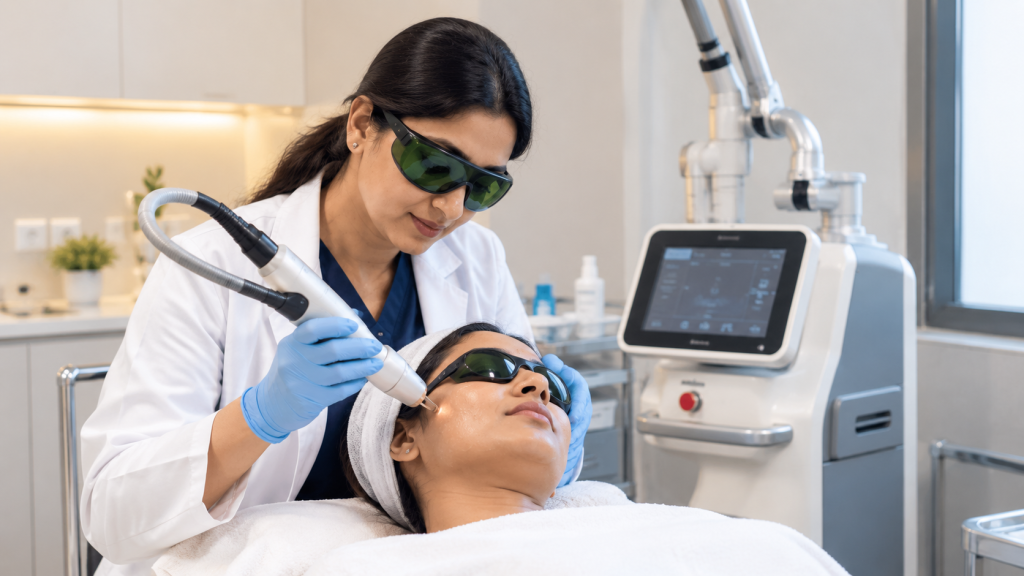
- Fractional CO2 Laser Resurfacing: Targets deep acne scars, dilated pores, and fine lines by creating micro-thermal zones to trigger collagen remodeling.
- Platelet-Rich Plasma (PRP) & GFC Therapy: Utilizes growth factors harvested from the patient’s own blood sample to stimulate dormant hair follicles and promote skin repair.
- Radiofrequency (RF) Microneedling: Combines mechanical microneedling with thermal energy to lift sagging tissue and smoothen surgical or acne scars.
- Medical-Grade Hydradermabrasion: Combines deep pore cleansing, gentle exfoliation, and targeted serum infusion without causing physical trauma to the skin barrier.
5. How to Select the Right Skin Clinic Near You
Follow this step-by-step checklist to evaluate local dermatology clinics:
1.Verify Doctor Credentials:Check qualifications and clinical registration.
Confirm that the primary treating physician possesses an MD or DNB in Dermatology. Check their credentials against national or local medical council registries.
2.Assess Technology & Device Safety:Ensure regulatory approval for equipment.
Verify that laser systems, radiofrequency machines, and diagnostic tools are US-FDA cleared or CE-marked for medical safety. Avoid clinics using non-standardized equipment.
3.Inspect Hygiene & Sterilization Standards:Prevent cross-contamination.
Ensure the facility utilizes single-use consumables, sealed needles, autoclaved surgical trays, and sanitized treatment spaces.
4.Review Diagnostic Thoroughness:Prioritize comprehensive assessments.
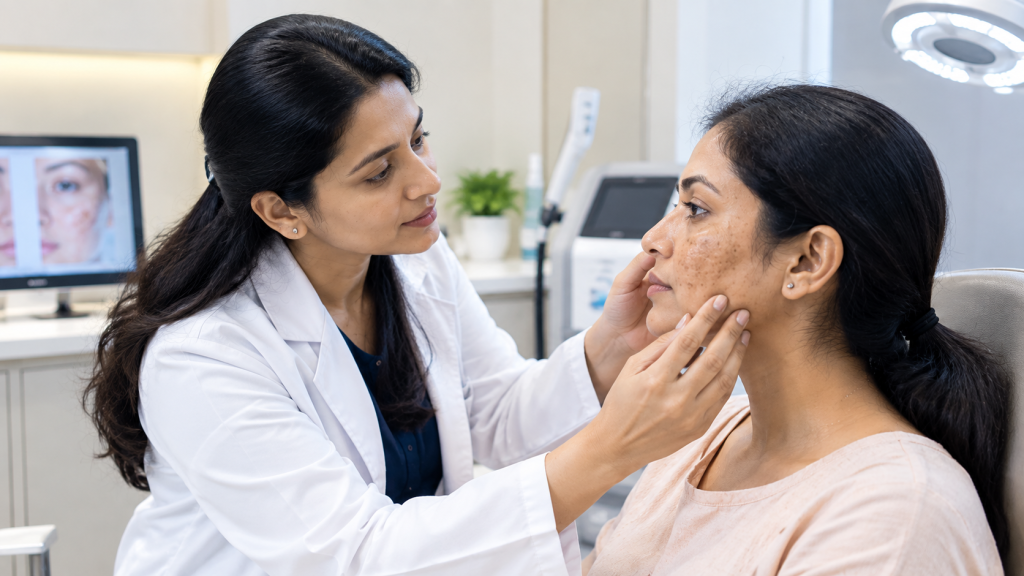
A reliable specialist conducts thorough physical examinations, dermoscopy, or trichoscopy before prescribing aggressive treatments or packages.
6. What to Expect During Your Initial Dermatology Consultation
Understanding what happens during your first clinical visit helps maximize the outcome of your appointment:
- Comprehensive History Taking: The specialist evaluates past medical conditions, current prescriptions, dietary habits, family history, and lifestyle factors.
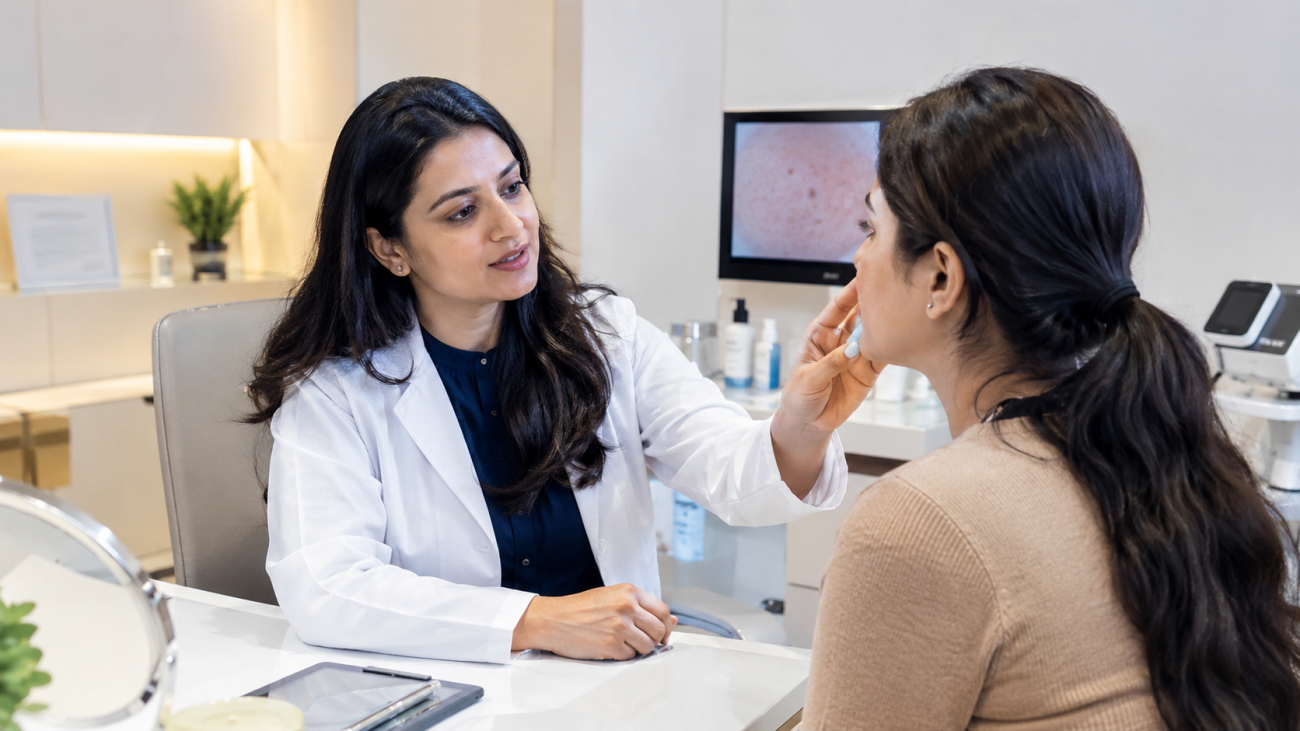
- Dermoscopic Examination: Using a high-magnification dermatoscope, the physician analyzes structural patterns in pigmented lesions, hair follicles, or skin folds.
- Customized Care Plan: The dermatologist outlines a diagnostic assessment, prescribes evidence-based topical or oral treatments, and discusses optional procedural interventions.
- Skincare Routine Adjustment: Guidance on sun protection factors (SPF), non-comedogenic moisturizers, and gentle cleansers tailored to your skin barrier profile.
7. Frequently Asked Questions (FAQs)
Q1: How often should I see a skin specialist for a routine check-up?
It is recommended to schedule an annual dermatological visit for a full-body mole check and skin cancer screening. Individuals managing chronic conditions like severe acne, eczema, or psoriasis may require visits every 4 to 8 weeks until their symptoms stabilize.
Q2: Are laser skin treatments safe for darker skin tones?
Yes, provided they are performed using appropriate wavelengths. The 1064nm Nd:YAG laser is considered safe for darker skin types (Fitzpatrick Types IV–VI) because it bypasses epidermal melanin, reducing the risk of post-inflammatory hyperpigmentation or burns.
Q3: What is the difference between salon facials and clinical skin treatments?
Salon facials focus primarily on surface relaxation and temporary hydration using over-the-counter products. Clinical treatments are conducted by or under the supervision of medical doctors using medical-grade active ingredients, US-FDA cleared equipment, and scientifically validated protocols tailored to address underlying skin pathologies.
Q4: How long does it take to see results from dermatological acne treatments?
Most evidence-based acne regimens require 6 to 8 weeks to demonstrate visible improvement. Cellular turnover takes roughly 28 to 40 days, meaning early consistency with prescribed topical and oral medications is critical.
