

Table of Contents
EV Charging for Businesses in Hyderabad | Guide
Electric vehicles are becoming an increasingly visible part of urban transportation, and businesses are adapting their properties and operations to accommodate EV users. Offices, retail outlets, hotels, apartment-linked commercial properties, industrial facilities, fleet depots, and other businesses can use EV charging infrastructure to support employees, customers, visitors, and company vehicles.
For businesses considering EV Charging for Businesses in Hyderabad, the right approach involves more than simply installing a charger. Site assessment, electrical capacity, charger selection, parking layout, connectivity, payment requirements, safety, maintenance, and future expansion all need to be considered.
A properly planned commercial EV charging system can become part of a property’s wider electrical and mobility infrastructure.
This guide explains how businesses can plan EV charging infrastructure, which charger types are commonly used, what factors affect installation, and how companies can manage charging stations over the long term.
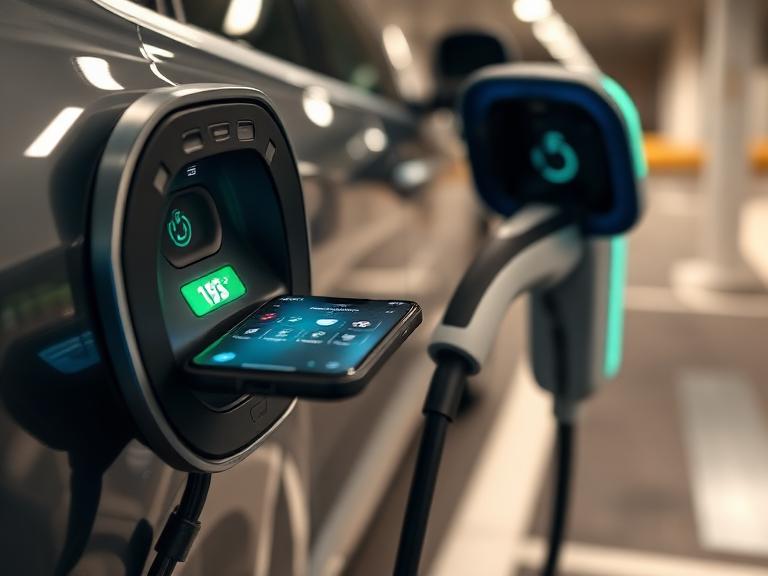
Why Are Businesses Installing EV Charging Stations?
Businesses may install EV chargers for several different purposes.
Employee Charging
Employees who drive EVs may need charging during working hours. Workplace charging can provide an additional charging option while vehicles are parked.
Customer Charging
Retail stores, shopping centres, restaurants, hotels, and other businesses can provide charging facilities for customers who spend time at the property.
Company Vehicles
Businesses operating electric cars, delivery vehicles, or other EVs may require dedicated charging infrastructure.
Fleet Operations
Commercial fleets can require multiple chargers with appropriate scheduling and energy-management systems.
Property Infrastructure
Commercial real-estate developers may integrate EV charging into parking and electrical infrastructure as part of modern building facilities.
The appropriate charging model depends on the business’s objectives, vehicle types, parking duration, and expected charging demand.
What Is EV Charging for Businesses?
EV Charging for Businesses in Hyderabad refers to the planning, installation, operation, and maintenance of EV charging infrastructure at commercial or business locations.
Business charging infrastructure can include:
- AC EV chargers
- DC fast chargers
- Multiple charging points
- Smart EV chargers
- Fleet charging systems
- Charging-management software
- RFID authentication
- Mobile-app integration
- Energy monitoring
- Remote monitoring
- Payment systems
- Load management
A business does not necessarily need the highest-power charger available. The appropriate system should be selected according to vehicle requirements, parking time, electrical capacity, and site objectives.
Where Can Businesses Install EV Chargers in Hyderabad?
Commercial EV chargers can potentially be installed in various locations, subject to site conditions and applicable requirements.
Examples include:
- Corporate offices
- IT parks
- Business centres
- Hotels
- Shopping complexes
- Retail outlets
- Restaurants
- Hospitals
- Educational campuses
- Industrial facilities
- Warehouses
- Fleet depots
- Commercial parking facilities
- Residential-commercial developments
Locations with longer vehicle dwell times may be suitable for AC charging, while locations where users need faster charging may consider DC charging.
AC vs DC Chargers for Businesses
One of the most important decisions is selecting the appropriate charger type.
AC EV Chargers
AC chargers can be suitable for locations where vehicles remain parked for several hours.
Potential applications include:
- Offices
- Hotels
- Residential-commercial properties
- Employee parking
- Long-duration parking
- Workplace charging
AC charging infrastructure can be useful when vehicles do not need to return to the road immediately.
DC Fast Chargers
DC fast chargers can deliver higher charging power and may be more appropriate for applications where vehicles need shorter charging periods.
Potential applications include:
- Fleet depots
- Highway-oriented facilities
- Public charging locations
- Commercial parking
- High-turnover sites
DC systems generally involve more complex electrical and thermal infrastructure, so proper site planning is particularly important.
How to Choose the Right EV Charger for a Business
Businesses should consider several factors before selecting charging equipment.
1. Vehicle Type
Different EVs have different charging capabilities. The charger should be compatible with the vehicles expected to use the facility.
2. Parking Duration
If vehicles remain parked for several hours, AC charging may be practical. If vehicles have short dwell times, higher-power charging may be considered.
3. Number of Vehicles
A business supporting a small number of EVs may require only a few charging points. A fleet or large commercial property may need multiple chargers.
4. Available Electrical Capacity
The site’s electrical infrastructure needs to support the planned charging load.
5. Future Expansion
Businesses should consider whether they may add more charging points later.
6. Budget
Equipment, electrical work, installation, networking, software, civil work, and ongoing maintenance can all contribute to project costs.
Site Assessment for Commercial EV Charging
A professional site assessment is an important stage before installation.
The assessment may consider:
- Existing electrical infrastructure
- Available load capacity
- Distribution boards
- Cable routing
- Earthing
- Parking arrangement
- Charger location
- Vehicle movement
- Network availability
- Weather exposure
- Safety requirements
- Future expansion
A site assessment helps determine whether the proposed charging system can be integrated appropriately into the property.
Electrical Load Planning
EV chargers can introduce additional electrical demand.
For example, a site with several high-power chargers may require significantly more electrical capacity than a location with one low-power AC charger.
Businesses should therefore evaluate:
- Existing electrical load
- Maximum demand
- Charger power
- Number of chargers
- Simultaneous charging
- Load-management requirements
- Distribution infrastructure
- Future charging demand
Where appropriate, smart load management can help distribute available electrical capacity across charging points.
Smart EV Charging for Businesses
Smart charging systems can provide businesses with greater visibility and control over charging infrastructure.
Depending on the platform, smart charging may support:
- Remote monitoring
- User authentication
- Charging schedules
- Energy monitoring
- Load management
- Usage reports
- Notifications
- Fault monitoring
- Remote diagnostics
For businesses operating multiple charging points, these capabilities can simplify infrastructure management.
EV Charging for Office Buildings in Hyderabad
Office buildings are one of the potential applications for workplace EV charging.
Employees may leave their vehicles parked for several hours, making workplace charging particularly relevant.
A commercial office charging system may include:
- Dedicated employee charging
- Visitor charging
- Multiple AC chargers
- Smart charging
- RFID authentication
- Charging usage reports
Businesses can determine whether charging should be complimentary, employee-paid, customer-paid, or managed through another operating model.
EV Charging for Retail and Commercial Properties
Retail properties often have a different charging pattern.
Customers may stay for shorter periods, while employees may remain for several hours.
Depending on the site, businesses could consider:
- AC charging for employees
- DC charging for shorter visits
- Multiple charging points
- Payment-enabled charging
- Digital charger monitoring
The charger configuration should reflect the expected parking duration and customer usage.
EV Charging for Hotels
Hotels can provide charging infrastructure for guests and visitors.
EV charging can potentially be integrated into:
- Hotel parking
- Valet parking
- Guest parking
- Conference facilities
- Staff parking
Hotels should consider charger visibility, parking management, user authentication, billing, maintenance, and accessibility when planning installations.
EV Charging for Fleets
Fleet operators have specific charging requirements.
A fleet charging system may need to support:
- Multiple vehicles
- Scheduled charging
- High charger availability
- Energy management
- Charging reports
- Vehicle allocation
- Overnight charging
- Fast charging where required
Fleet operators should consider the daily travel patterns of their vehicles before selecting charger capacity.
For example, a fleet where vehicles return to the depot overnight may have different requirements from vehicles operating continuously throughout the day.
Commercial EV Charging Infrastructure
A complete commercial EV charging project may include much more than the charging hardware itself.
Typical components can include:
- EV charging equipment
- Electrical distribution
- Protection devices
- Cables
- Charging connectors
- Mounting structures
- Networking equipment
- Software platform
- Authentication system
- Payment integration
- Signage
- Parking arrangements
- Monitoring systems
- Maintenance support
The exact configuration depends on the project.
EV Charger Installation Process for Businesses
A typical commercial installation process can involve several stages.
Step 1: Requirement Assessment
Identify the number and type of EVs expected to use the chargers.
Step 2: Site Survey
Evaluate electrical infrastructure, parking, cable routes, and installation conditions.
Step 3: Charger Selection
Choose AC or DC equipment based on operational requirements.
Step 4: Electrical Planning
Determine load requirements, protection, distribution, and cable specifications.
Step 5: Installation
Install the charger and associated electrical infrastructure according to the approved design.
Step 6: Testing
The system should be tested before being placed into regular operation.
Step 7: Software Configuration
Where applicable, configure networking, authentication, monitoring, and payment functionality.
Step 8: Handover
Operators should receive appropriate operating information and maintenance documentation.
EV Charging Station Safety for Businesses
Safety should be considered throughout the charging infrastructure lifecycle.
Businesses should pay attention to:
- Electrical protection
- Proper earthing
- Cable management
- Charger placement
- Vehicle movement
- Water exposure
- Ventilation
- Emergency procedures
- Physical protection
- Regular maintenance
Users should follow the charger manufacturer’s operating instructions.
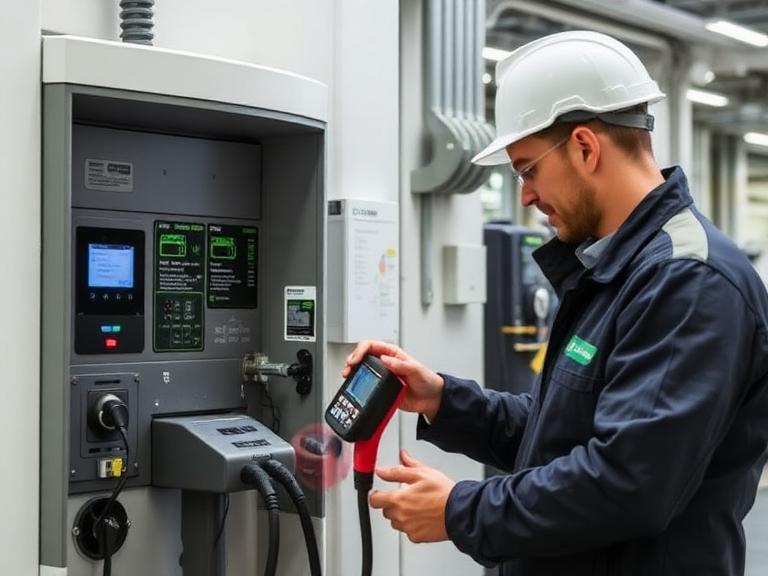
Any electrical installation and technical servicing should be performed by appropriately qualified professionals.
EV Charger Maintenance for Businesses
Installing a commercial charger without a maintenance plan can create operational challenges.
Maintenance can include:
- Charger inspection
- Cable inspection
- Connector inspection
- Electrical testing
- Error-log analysis
- Software checks
- Network testing
- Cooling-system inspection
- Performance checks
- Preventive servicing
For businesses operating multiple chargers, an EV Charger AMC can provide a structured maintenance arrangement.
EV Charger Monitoring and Management
For commercial charging infrastructure, monitoring can help businesses understand how their chargers are being used.
Depending on the system, businesses may monitor:
- Charging sessions
- Energy consumption
- Charger availability
- Faults
- User activity
- Charging duration
- Network status
This information can help operators identify frequently used chargers, recurring faults, and potential infrastructure requirements.
What Does Commercial EV Charging Cost?
There is no single price for installing EV charging infrastructure for a business.
The overall project cost can depend on:
- Charger type
- Charger power
- Number of charging points
- Electrical upgrades
- Cable length
- Civil work
- Installation complexity
- Networking
- Software
- Payment integration
- Site conditions
- Maintenance requirements
A professional site assessment is generally necessary to estimate the actual project requirements.
Businesses should evaluate the complete infrastructure cost rather than looking only at the price of the charger hardware.
How Businesses Can Plan Future EV Charging Demand
Charging requirements can change as EV adoption increases.
A business planning a new charging station should consider:
- Current EV users
- Expected EV adoption
- Employee demand
- Customer demand
- Fleet growth
- Available parking
- Electrical capacity
- Additional charger locations
A scalable design can make future expansion easier.
For example, a company may initially install several AC chargers while designing electrical infrastructure that can accommodate additional charging points later.
Benefits of EV Charging for Businesses
Depending on the business model, commercial charging infrastructure can provide several operational opportunities.
Workplace Convenience
Employees can have access to charging while their vehicles are parked at work.
Customer Facility
Retail and hospitality businesses can offer charging as an additional property facility.
Fleet Support
Charging infrastructure can support businesses transitioning company vehicles to electric models.
Property Modernization
EV charging can become part of a property’s broader mobility and infrastructure strategy.
Charging Management
Smart charging platforms can provide visibility into charger usage and operational status.
Future Readiness
Planning charging infrastructure can help businesses prepare for increasing EV usage.
These benefits depend on the specific business, site, charging model, and utilization.
Common Mistakes Businesses Should Avoid
Choosing Chargers Without Assessing Electrical Capacity
The charger should be selected after understanding the site’s electrical infrastructure.
Installing Too Few Chargers
Businesses should consider current and expected demand.
Ignoring Maintenance
Charging equipment requires ongoing inspection and servicing.
Poor Cable Management
Cable placement should minimize trip hazards, vehicle damage, and unnecessary mechanical stress.
Forgetting Networking Requirements
Connected chargers may require reliable internet or cellular communication.
Not Planning Expansion
Future charging requirements should be considered during initial infrastructure planning.
Focusing Only on Hardware Price
Installation, electrical upgrades, software, networking, maintenance, and civil work can all affect the overall project.
Why Choose ZyCharge for EV Charging for Businesses in Hyderabad?
ZyCharge Energies Pvt. Ltd. provides EV charging infrastructure solutions for businesses and other commercial applications.
Its services include AC EV chargers, DC fast chargers, charging station setup, installation, maintenance, CPO services, and customized EV infrastructure solutions.
For businesses, charging infrastructure can be designed around specific operational requirements, including employee charging, customer facilities, fleet charging, commercial properties, and other use cases.
A business considering EV charging should evaluate its vehicles, parking patterns, electrical infrastructure, expected utilization, and future requirements before finalizing a charging solution.
Frequently Asked Questions
1. What is EV Charging for Businesses in Hyderabad?
It refers to the installation and operation of EV charging infrastructure at offices, commercial properties, fleet facilities, hotels, retail locations, and other business premises in Hyderabad.
2. Why should businesses install EV chargers?
Businesses may install EV chargers to support employees, customers, visitors, company vehicles, or electric fleets and to integrate charging into their property infrastructure.
3. Which EV charger is best for a business?
The appropriate charger depends on vehicle type, parking duration, charging demand, electrical capacity, budget, and operational requirements. AC chargers may suit longer parking periods, while DC chargers can support faster charging.
4. How much does a commercial EV charging station cost?
The cost varies according to charger type, power rating, number of chargers, electrical upgrades, installation requirements, civil work, networking, software, and site conditions.
5. Can an office install EV charging stations?
Yes. Offices can install EV chargers subject to suitable electrical infrastructure, parking arrangements, installation conditions, and applicable requirements.
6. Is AC or DC charging better for businesses?
Neither is universally better. AC charging can suit longer parking periods, while DC charging may be appropriate where faster charging and higher vehicle turnover are required.
7. Can businesses install multiple EV chargers?
Yes. Businesses can deploy multiple chargers, provided the electrical infrastructure and site design can support the planned charging load.
8. Do businesses need a site survey before EV charger installation?
A site survey is highly useful because it helps assess electrical capacity, parking, cable routing, charger placement, networking, and other installation requirements.
9. Can EV chargers be installed at hotels?
Yes. Hotels can install chargers in guest parking, staff parking, or other suitable areas depending on the property’s infrastructure and operating requirements.
10. Can EV charging stations support business fleets?
Yes. Fleet charging systems can be designed around vehicle schedules, charging requirements, number of vehicles, charging duration, and available electrical capacity.
11. Can businesses use smart EV chargers?
Yes. Smart chargers can support functions such as remote monitoring, energy management, authentication, scheduling, reporting, and diagnostics, depending on the system.
12. Do commercial EV chargers require maintenance?
Yes. Regular inspection and maintenance can help identify electrical, mechanical, software, connectivity, and thermal issues.
13. Can businesses get EV charger AMC services?
Yes. Businesses can use Annual Maintenance Contracts covering specified inspection, preventive maintenance, troubleshooting, and technical-support services.
14. Can EV charging stations support payment systems?
Depending on the charging platform, commercial stations can support payment and billing functionality through appropriate software and payment integrations.
15. Can EV chargers be expanded later?
Potentially. Future expansion should be considered during initial electrical and site planning to determine whether additional chargers can be accommodated.
16. How long does EV charger installation take?
Installation time varies according to charger type, electrical upgrades, civil work, site complexity, approvals, and the number of charging points.
17. What businesses can install EV charging stations?
Offices, hotels, retail properties, restaurants, industrial facilities, warehouses, fleet operators, commercial parking facilities, and other suitable businesses can consider EV charging infrastructure.
18. Why is electrical load planning important for commercial EV chargers?
EV chargers add electrical demand. Load planning helps determine whether existing infrastructure can support the proposed charging system and whether upgrades or load-management measures are required.
Conclusion
EV Charging for Businesses in Hyderabad is becoming an important consideration for companies, commercial property owners, fleet operators, hotels, offices, and retail businesses.
The right charging infrastructure depends on several factors, including vehicle type, parking duration, expected charging demand, electrical capacity, available space, budget, networking requirements, and future expansion plans.
AC chargers can be suitable for longer parking periods, while DC fast chargers can support applications where faster charging is required. Smart charging and monitoring systems can provide additional management capabilities for businesses operating multiple charging points.
However, successful commercial EV charging involves more than installing hardware. Proper site assessment, electrical planning, professional installation, testing, software configuration, and ongoing maintenance all contribute to a functional charging environment.
Businesses in Hyderabad can therefore approach EV charging as a long-term infrastructure project rather than a standalone equipment purchase. With appropriate planning and professional technical support, charging stations can be integrated into workplace, customer, fleet, and commercial-property requirements.
