
Table of Contents
Best Dermatologist Near Me | Advanced Skin, Hair & Aesthetic Care
When skin, hair, or nail concerns arise, typing “Dermatologist near me“ into a search engine is often the critical first step toward medical resolution. Cutaneous health directly impacts overall physical well-being, systemic health, and psychological self-confidence. However, selecting the right medical specialist amidst a sea of beauty centers, cosmetic parlors, and non-certified clinics requires understanding professional qualifications, diagnostic capabilities, and specialized treatment options.
This clinical guide outlines how to evaluate nearby dermatologists, distinguishes medical from aesthetic care, breaks down specialized diagnostic procedures, and answers common questions regarding patient consultations.
1. Defining Medical Dermatology vs. Cosmetology
A primary point of confusion for patients searching for skin specialists is the difference between a Board-Certified Dermatologist and a Cosmetologist or Esthetician.
┌─────────────────────────────────────────────────────────────────────────────────┐
│                       DERMATOLOGIST vs. COSMETOLOGIST                           │
├────────────────────────────────────────┬────────────────────────────────────────┤
│           DERMATOLOGIST (MD/DNB)       │        COSMETOLOGIST / ESTHETICIAN     │
├────────────────────────────────────────┼────────────────────────────────────────┤
│ • Medical Doctor Degree (MBBS + MD/DNB)│ • Diploma or Certification in Beauty   │
│ • Diagnoses 3,000+ Skin/Hair Diseases  │ • Focuses on Surface Skin Beautification│
│ • Prescribes Systemic Medical Therapeutics│ • Applies Non-Prescription Products    │
│ • Performs Surgical & Medical Lasers   │ • Offers Facials, Waxing, Clean-ups    │
│ • Licensed for Invasive Procedures     │ • Restricted to Non-Invasive Care      │
└────────────────────────────────────────┴────────────────────────────────────────┤
Medical Dermatologists
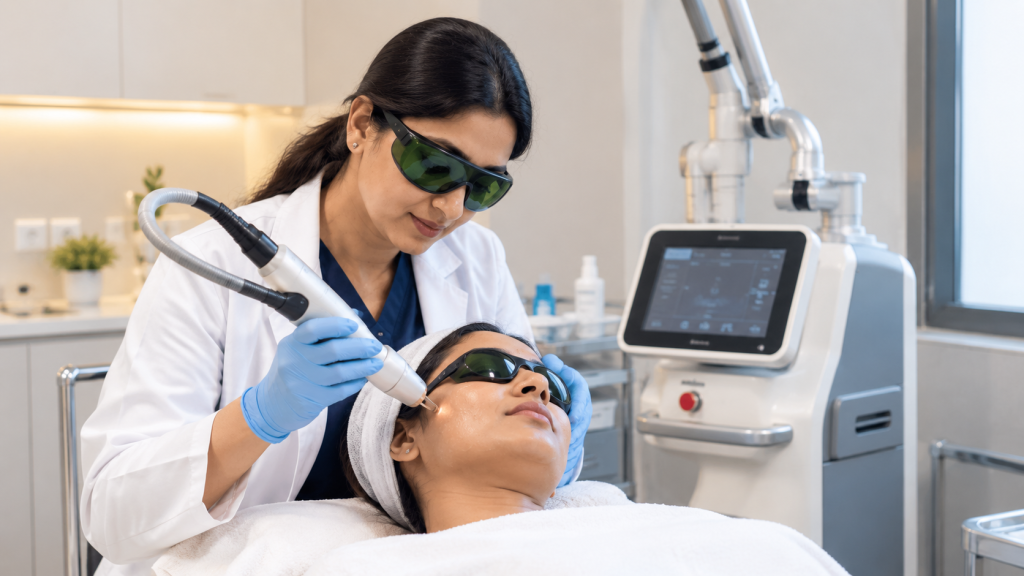
A dermatologist is a medical doctor who completed a 5.5-year MBBS degree followed by a 3-year postgraduate residency (MD or DNB) specializing in Dermatology, Venereology, and Leprosy. They possess deep training in cutaneous pathology, immunology, pharmacology, and dermatosurgery.
Cosmetologists & Salon Professionals
Cosmetologists generally hold non-medical diplomas or short certification courses focusing on superficial salon services (e.g., non-medical facials, threading, basic chemical scrubs). Relying on non-medical personnel for underlying medical skin conditions like severe inflammatory acne, psoriasis, or suspicious moles can delay proper diagnosis and cause complications.
2. Core Sub-Specialties in Dermatology
Modern dermatology encompasses several sub-specialties designed to target specific patient needs:
                      ┌────────────────────────────────────────┐
                      │    DERMATOLOGY SUB-SPECIALIZATION      │
                      └───────────────────┬────────────────────┘
                                          │
       ┌──────────────────┬───────────────┴───────────────┬──────────────────┐
       ▼                  ▼                               ▼                  ▼
┌──────────────┐   ┌──────────────┐                ┌──────────────┐   ┌──────────────┐
│   Medical    │   │  Aesthetic   │                │ Trichology & │   │ Pediatric    │
│ Dermatology  │   │ Dermatology  │                │ Hair Care    │   │ Dermatology  │
└──────────────┘   └──────────────┘                └──────────────┘   └──────────────┘
A. Medical Dermatology
Focuses on evaluating, diagnosing, and managing chronic or acute pathological conditions of the skin, hair, nails, and mucous membranes.
- Key Conditions: Acne vulgaris, eczema (atopic dermatitis), psoriasis, vitiligo, rosacea, urticaria (hives), contact dermatitis, bacterial/fungal/viral infections, and autoimmune skin disorders.
B. Aesthetic & Procedural Dermatology
Combines clinical expertise with cosmetic technology to restore skin texture, tone, and volume loss.
- Key Procedures: Medical laser therapies, chemical peels, botulinum toxin injections, dermal fillers, microneedling radiofrequency (MNRF), scar revision, and photo-rejuvenation.
C. Trichology & Scalp Disorders
Focuses specifically on diseases affecting the hair follicles and scalp microenvironment.
- Key Conditions: Androgenetic alopecia (pattern baldness), telogen effluvium, alopecia areata, scalp psoriasis, seborrheic dermatitis, and lichen planopilaris.
D. Pediatric Dermatology
Dedicated to infants, children, and adolescents suffering from congenital, genetic, or acquired pediatric skin conditions.
- Key Conditions: Infantile eczema, hemangiomas, birthmarks, viral exanthems, molluscum contagiosum, and diaper dermatitis.
3. Checklist: How to Choose a “Dermatologist Near Me”
When evaluating clinics and specialists in your local area, consider these core clinical criteria:
- Medical Qualifications & Registration: Ensure the physician holds an accredited MD or DNB degree in Dermatology and is registered with official state or national medical councils.
- Diagnostic Infrastructure: Verify if the clinic utilizes advanced diagnostic tools such as digital dermoscopy, trichoscopy, wood’s lamp examination, or in-house skin biopsy capabilities.
- FDA-Approved Technology: For laser or procedural treatments, confirm that the clinic uses medical-grade, US-FDA (or equivalent regulatory body) approved equipment rather than unregulated salon devices.
- Transparent Clinical Protocols: Top dermatologists emphasize clear communication, explain underlying causes, discuss potential side effects, and avoid pressuring patients into unneeded cosmetic packages.
- Authentic Patient Reviews: Look for consistent feedback regarding diagnostic accuracy, doctor empathy, waiting times, and post-consultation care.
4. What to Expect During a Professional Consultation
A thorough dermatological visit follows a structured medical framework:
                      ┌────────────────────────────────────────┐
                      │    CLINICAL CONSULTATION WORKFLOW      │
                      └───────────────────┬────────────────────┘
                                          │
 1. Medical History  ──► 2. Visual & Dermoscopic ──► 3. Diagnostic Tests ──► 4. Tailored Care Plan
    & Symptom Review        Clinical Assessment        (Biopsy/Wood's Lamp)   & Follow-up Schedule
- Detailed Medical History: The dermatologist assesses your genetic history, dietary habits, stress levels, current medications, skincare routines, and environmental exposures.
- Dermoscopic Examination: Using a dermatoscope (a specialized magnifying tool with polarized light), the doctor examines deep epidermal and dermal structures invisible to the naked eye.
- Diagnostic Testing (If Required):
- Wood’s Lamp Examination: Uses transillumination to detect fungal/bacterial infections or pigmentary alterations (vitiligo vs. melasma).
- Skin Biopsy: A small tissue sample is taken under local anesthesia for histopathological testing if an autoimmune disease, severe skin lesion, or malignancy is suspected.
- Personalized Treatment Plan: Combination of targeted topical therapies, systemic medications, lifestyle modifications, and scheduled follow-ups.
5. Overview of Specialized Treatments Available at Local Dermatology Clinics
| Category | Specific Clinical Treatment | Common Clinical Indications | Recovery Time |
| Acne & Scar Care | Salicylic Peels, Subcision, MNRF, Fractional CO2 | Active inflammatory acne, boxcar & rolling scars | 1 to 5 Days |
| Pigmentation Control | Q-Switched Nd:YAG Laser, Cosmelan, Glycolic Peels | Melasma, post-inflammatory hyperpigmentation (PIH), freckles | Minimal to 3 Days |
| Hair Restoration | Platelet-Rich Plasma (PRP/PRF), Growth Factors, Minoxidil | Pattern hair loss, thinning, alopecia areata | 24 Hours |
| Anti-Aging & Texture | Botulinum Toxin, Dermal Fillers, Microneedling | Dynamic wrinkles, volume loss, fine lines | 24 to 48 Hours |
| Medical Dermatoses | Biologicals, Narrowband UVB Phototherapy, Retinoids | Severe psoriasis, eczema, vitiligo, chronic rashes | None |
| Minor Dermatosurgery | Radiofrequency Cautery, Cryotherapy, Excision | Moles, skin tags, warts, seborrheic keratoses | 3 to 7 Days |
6. Pre-Appointment Preparation Guidelines
To maximize the efficiency and accuracy of your dermatologist visit, follow these simple steps:
- Remove Makeup & Heavy Creams: Arrive with clean skin so the doctor can observe your natural skin tone and texture without obstruction.
- Document Your Routine: Take photos of all your current skincare products, cleansers, serums, and prescriptions to show during the appointment.
- Track Symptom Triggers: Note down when flare-ups occur, associated symptoms (itching, burning, pain), and potential environmental or food triggers.
- List Past Treatments: Keep track of previous dermatological prescriptions or cosmetic procedures that worked or failed in the past.
7. Frequently Asked Questions (FAQs)
Q1: How do I choose the best dermatologist near me?
Look for a board-certified dermatologist (MD or DNB in Dermatology, Venereology, and Leprosy) registered with official medical councils. Check patient reviews, clinic hygiene, diagnostic technology, and verified clinical experience.
Q2: What is the difference between a dermatologist and a cosmetologist?
A dermatologist is a licensed medical doctor (MD/DNB) who diagnoses and treats medical diseases of the skin, hair, and nails as well as performing aesthetic procedures. A cosmetologist or esthetician focuses purely on non-medical, surface-level beauty treatments.
Q3: How much does a dermatologist consultation cost near me?
Dermatology consultation fees generally range between ₹500 and ₹1,500 depending on the specialist’s experience, location, and clinic infrastructure.
Q4: What conditions does a medical dermatologist treat?
Medical dermatologists treat acne, eczema, psoriasis, rosacea, vitiligo, hair loss (alopecia), fungal infections, contact dermatitis, hives, and skin cancer screenings.
Q5: Should I see a dermatologist for hair loss?
Yes. Dermatologists are trained trichologists. They evaluate hair loss via trichoscopy, blood panels, and scalp biopsies to diagnose conditions like androgenetic alopecia or telogen effluvium.
Q6: Do dermatologists offer online or tele-consultations?
Yes, many clinics provide virtual video consultations for initial evaluations, follow-ups, prescription renewals, and localized rash diagnoses.
Q7: What should I prepare before my first dermatologist appointment?
Bring a list of your current skincare products, medical history, active prescriptions, and note down when your symptoms started. Avoid wearing heavy makeup to allow thorough skin assessment.
Q8: Can a dermatologist treat dark spots and hyperpigmentation?
Yes. Dermatologists use prescription topical agents, customized chemical peels, Q-switched lasers, and IPL devices to target excess melanin.
Q9: Is a referral required to visit a dermatologist near me?
In private clinical setups, direct appointments can be booked without a primary care referral. Some health insurance policies or hospital networks may require a referral.
Q10: When should I see a pediatric dermatologist for my child?
Schedule a consultation if your child exhibits persistent eczema, unexplained rashes, birthmarks, pediatric acne, molluscum contagiosum, or severe diaper dermatitis.
Q11: How often should I visit a dermatologist for skin checks?
An annual skin examination is recommended for routine preventative care, mole monitoring, and skin health tracking. Those with chronic conditions may require frequent visits.
Q12: Are dermatological procedure costs covered by health insurance?
Medical dermatology treatments (like severe eczema, psoriasis, skin biopsies, or cyst excisions) may be covered depending on your policy. Cosmetic enhancements are generally out-of-pocket.
Q13: Can a dermatologist remove skin tags, moles, and warts safely?
Yes. Dermatologists perform radiofrequency cautery, cryotherapy, or minor surgical excisions in-clinic under sterile conditions without scarring risks.
Q14: What is the difference between aesthetic dermatology and medical dermatology?
Medical dermatology treats pathological skin conditions and diseases. Aesthetic dermatology focuses on elective cosmetic enhancement like laser skin rejuvenation, anti-aging, and scar restoration.
Q15: How do laser skin treatments performed by dermatologists differ from salon treatments?
Medical-grade lasers operate at higher energy fluences and precise wavelengths under physician supervision, ensuring safety and efficacy compared to low-energy salon devices.
